For decades, many American families have followed the same financial path:
work hard, save slowly, depend on a 401(k), and hope there is enough money left for retirement and college expenses.
Unfortunately, today’s economic reality is becoming more difficult:
- College costs continue rising faster than inflation
- Retirement ages are increasing
- Many families have very little emergency savings
- Market volatility creates uncertainty
- Student loan debt continues to grow
According to recent financial studies, a large percentage of Americans have less than $5,000 in savings. At the same time, the cost of a four-year college education can easily exceed $200,000.
This has created what many financial professionals now call a “Savings Crisis.”
Why Starting Early Matters
One of the most powerful concepts in wealth creation is compound growth.
A child who starts saving early may have a dramatically different financial future than someone who waits until adulthood.
For example:
- Saving $50 per month starting at age 1 with long-term growth assumptions may create significantly more wealth over time.
- Waiting until age 18 to begin saving can reduce long-term accumulation dramatically.
The lesson is simple:
Time is often more important than the amount invested.
Traditional College Savings Approaches
Savings Accounts
Many parents use traditional bank savings accounts for their children.
Pros:
- Easy access
- Flexible use
- Simple to understand
Cons:
- Very low growth
- Inflation reduces purchasing power
- Taxable growth
529 College Plans
529 plans are popular education savings tools because they offer:
- Tax-deferred growth
- Tax-free withdrawals for qualified education expenses
- Potential state tax benefits
However, they also come with limitations:
- Primarily restricted to educational use
- Subject to market risk
- May impact FAFSA calculations
- Penalties for non-qualified withdrawals
A Different Approach: The Child Asset Plan Concept
Some families explore advanced financial strategies sometimes referred to as:
- Child Asset Plans (CAP)
- Infinite Banking Concepts
- Properly Structured Permanent Life Insurance Plans
These strategies are designed to combine:
- Long-term cash accumulation
- Tax advantages
- Downside market protection (depending on structure)
- Flexible access to funds
- Legacy planning benefits
The concept is based on properly structured permanent life insurance policies designed primarily for cash value growth rather than maximum death benefit.
Potential Benefits of This Strategy
1. Flexibility
Funds may potentially be used for:
- College
- Business startup
- Down payment on a home
- Retirement income
- Emergency opportunities
2. Tax Advantages
Certain structures may allow:
- Tax-deferred growth
- Tax-advantaged access through policy loans
- Estate planning advantages
3. Market Protection
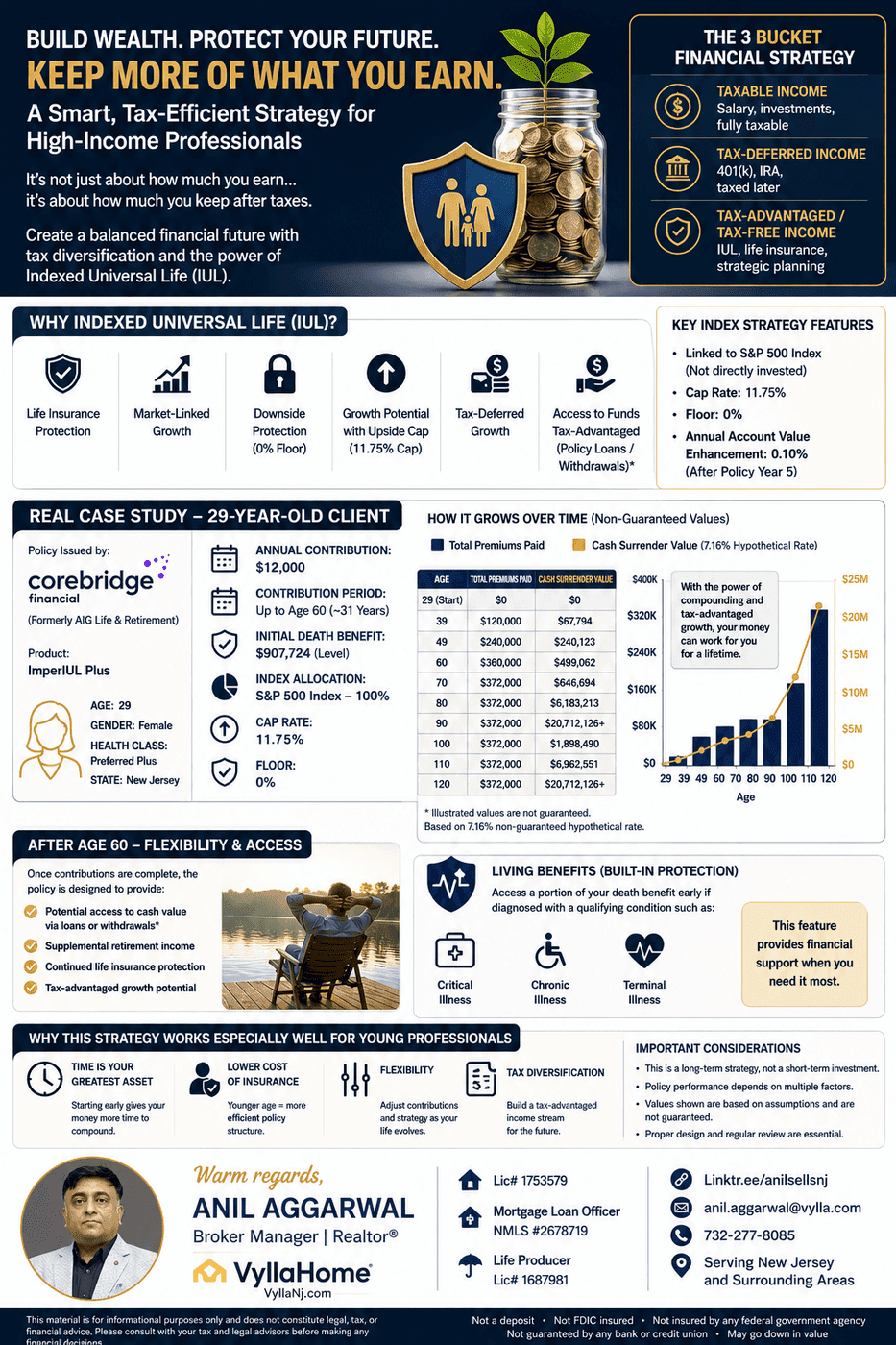
Some indexed strategies include downside protection features that help prevent direct market losses while still allowing limited participation in market gains.
4. Generational Wealth Planning
Many wealthy families use long-term insurance-based strategies as part of their legacy planning because they can transfer wealth efficiently across generations.
The Real Goal: Financial Education
The biggest takeaway is not simply about a financial product.
It is about changing how families think:
- Start early
- Think long-term
- Use compounding wisely
- Build assets
- Protect against unnecessary risk
- Teach children financial literacy
The earlier families begin planning, the more options they may create for the next generation.
Final Thoughts
There is no “one-size-fits-all” financial strategy.
Every family should consult licensed financial, tax, and legal professionals before making decisions.
However, one thing is becoming increasingly clear:
families who begin early and think strategically often create stronger financial foundations for future generations.
The real question is:
What financial legacy are we creating for our children today?
Suggested Call-To-Action
Want to learn more about:
- College planning
- Tax-advantaged wealth strategies
- Real estate investing
- Infinite banking concepts
- Generational wealth planning
Contact Anil Aggarwal
📧 anil.aggarwal@vylla.com
📞 732-877-8585
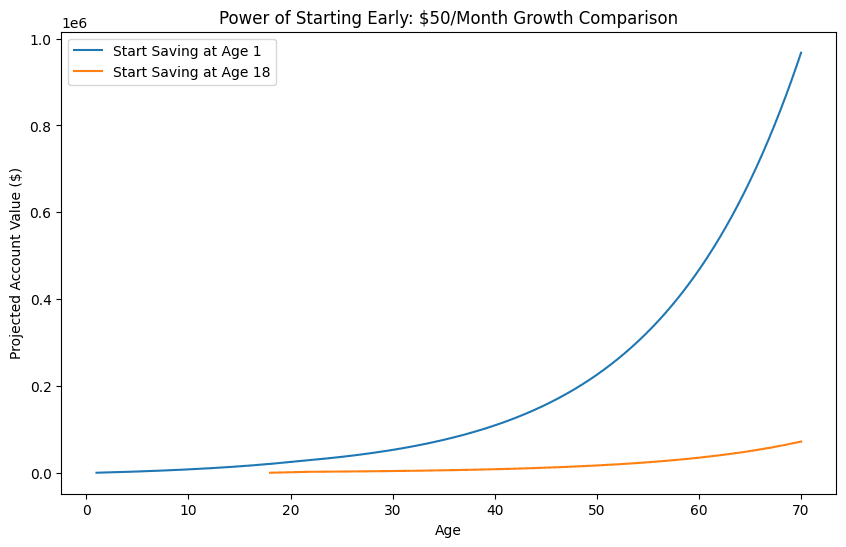
This graph compares:
- Saving $50/month starting at age 1
vs. - Saving $50/month starting at age 18
using a projected 7.3% annual growth rate.
Visit:
Anil Sells NJ
Vylla NJ